6 min read
How to Choose a Personalized Book by Age: 0–2, 2–4, 4–6, 6–8
A practical guide to matching a personalized storybook to your child's stage — what works at each age from 0 to 8, with example stories for every range.
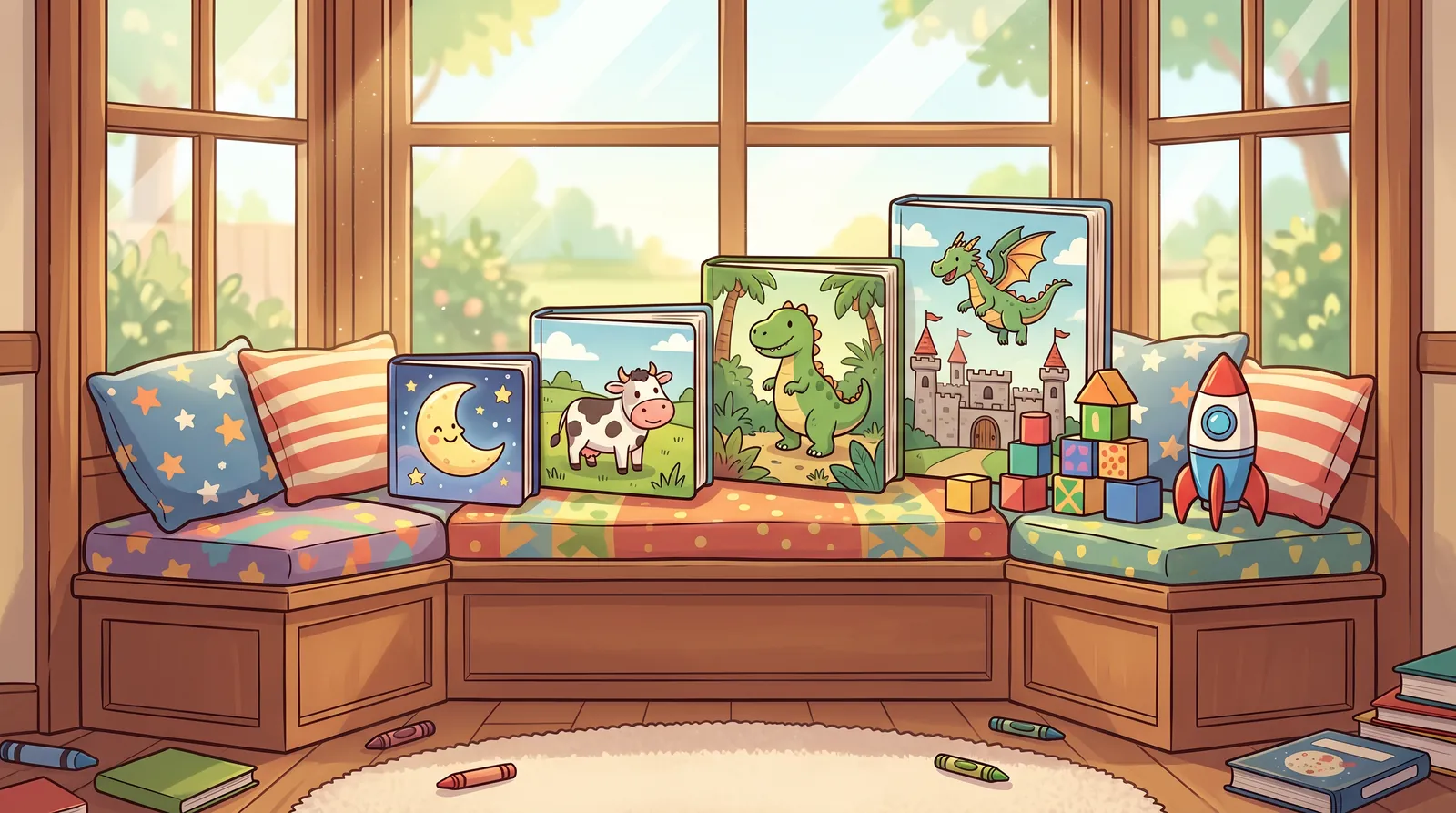
A book that delights a seven-year-old will bore a toddler, and a book that soothes a baby will feel babyish to a kindergartner. Age fit matters more in children's books than almost anywhere else — attention span, vocabulary, and what a child finds funny or scary all change fast in the first eight years.
Every story in our library carries a recommended age range, and the ranges aren't decoration: the sentence length, page rhythm, themes, and illustration style are chosen for that stage. Here's what each range is designed around, with examples from our library — and some honest advice about reading "up" and "down."
Ages 0–2: rhythm, naming, and a familiar face
Babies and young toddlers don't follow plots — they follow rhythm, repetition, and pictures of things they can name. The best books at this stage are really structured lullabies and naming games: short lines, a steady beat, one clear image per page. And the single most interesting image in the world to a baby is a face, especially a familiar one.
That's what makes personalization land surprisingly early. A baby won't understand the story, but they will study the hero's face — and parents get the fun of narrating their own child through the pages.
From our library: Goodnight Moon and Me is a gentle goodnight ritual in book form, built for winding down. Animal Sounds turns the classic "what does the cow say?" game into a story, which makes it the interactive, giggly one — better for daytime than lights-out.
Ages 2–4: my world, my feelings, my milestones
Preschoolers live in the concrete here-and-now: birthdays, big feelings, new siblings, the potty, the playground. Stories start to matter as stories, but the winning ones mirror the child's actual life — which makes this the sweet spot for personalization, because the mirror is literal.
This is also the age of big transitions, and a book where your own child navigates the transition is a gentle rehearsal. Reading about yourself welcoming the new baby is far more persuasive than being told to be a good big sibling.
From our library: My Birthday Party bottles the best day of a preschooler's year. My New Baby Sibling helps a toddler feel like the hero of the new-baby story rather than the dethroned one. How I Feel Today walks through big emotions with your child's own face showing each one — many parents use it as a calm-down conversation starter, not just a bedtime read.
Ages 4–6: bigger adventures and first-day nerves
By four or five, children can hold a real plot: a beginning, a problem, a resolution. They're ready for stories that leave the house — dinosaurs, superpowers, time travel — while still wanting the security of themselves at the center. Personalization does double duty here: it fuels imagination ("I met a T-rex!") and it builds courage, because the hero facing the scary new thing is them.
It's also the start of school, and few tools ease first-day jitters like a story in which your child has already walked through those doors and come out smiling.
From our library: First Day at School is the reassuring milestone book — read it the week before term starts. Dinosaur Day sends your child back in time to meet real dinosaurs, ideal for the fact-hungry stage. Superhero School gives them a first day at a very different school, where everyone discovers a unique power — a nice pick for a child who needs the confidence angle wrapped in more fun.
Ages 6–8: longer stories for proud new readers
Early readers want length and depth: multi-step quests, worlds with rules, a hero who earns the ending. They're also starting to read to you — so text that's rich but decodable, in a book where their own name keeps appearing, gives them both a challenge and a reason to take the wheel.
Don't underestimate the pride factor at this age. A six-year-old showing a friend a real hardcover book in which they ride a dragon is a core memory in the making.
From our library: The Magic Treehouse takes your child through time to legendary places — the pick for curious explorers. The Dragon Rider Academy, our most epic story, trains them at a mountaintop school for dragon riders — the pick for fantasy lovers who want the biggest adventure on the shelf.
Reading up, reading down, and other practical tips
The ranges are guides, not rules. A few honest tips from watching lots of families choose:
- Reading "up" one range works when an adult is reading aloud — a three-year-old can love Dinosaur Day at bedtime even if the sentences are long for them.
- Reading "down" is fine too: older children often enjoy an "easy" personalized book precisely because they can read it entirely by themselves.
- Match the book to the moment: a milestone story lands best just before or during the milestone (new sibling, first day of school, birthday).
- For gifts, when in doubt, choose the lower range — a book a child grows into beats one that goes over their head today.
- You don't have to guess: with StoryMagic you see a free preview of your child as the hero before buying, so you can judge the fit yourself before you spend anything.